A National Register district of 1890s–1920s houses built for Stanford faculty
Professorville’s Small Kitchens, Rebuilt With Care
The kitchens in Professorville were built as working rooms behind the dining room, and most are still the size they were a century ago. PineWood Cabinets designs cabinetry that makes those rooms work, builds it in our Rocklin, Placer County workshop, and installs it with our own crew in Palo Alto.
- Crafting custom cabinetry since 2006
- Licensed California contractor · CSLB #1095293
- Based in Rocklin, serving Silicon Valley & the Peninsula
- Design, build & install under one roof
Houses Built for Stanford’s First Faculty
PineWood Cabinets builds custom kitchen cabinetry for Professorville homeowners who want a kitchen that belongs to a historic house and still works for a household today. The cabinetry is designed, built, and finished in our workshop in Rocklin, Placer County, and our own crews travel to Palo Alto to measure and install.
Professorville is the group of blocks just south of downtown Palo Alto where the university’s early professors built their houses, beginning in the 1890s and continuing through the 1920s. It is listed on the National Register of Historic Places, and it is one of the most intact early residential districts on the Peninsula. The architecture is what those decades produced: Craftsman bungalows and larger Craftsman houses, brown-shingle houses in the Bay Area tradition, and Colonial Revival and Queen Anne houses on the earliest blocks. The streetscape is consistent, the setbacks are deep, and the trees are a century old.
Inside, the houses carry the detail the period was known for. Douglas fir or oak trim, built-in bookcases and sideboards, box beams, paneled wainscot, and casework that was made on site by carpenters who expected it to last. The kitchen was the exception. It was a working room behind the dining room, small, closed off, with a pantry and a service porch, and it was finished plainly. Many are still roughly that size, because the lots are not large and the exterior is protected, and many hold a 1970s or 1980s remodel that has reached the end of its life.
So the Professorville brief is specific: make a small kitchen work hard, and make it look as though the carpenters who built the dining room had built it too.

Historic Review, City Permits, and the Line Between Them
Professorville is a historic district, and owners sometimes assume that means every project goes before a board. It does not. The City of Palo Alto applies its own design guidelines to the district, and they are concerned with the exterior: street-facing facades, windows, rooflines, and additions. Changing the cabinetry inside an existing kitchen does not alter any of that, and it is the owner’s decision. Where review begins is at the envelope, when a project would enlarge a window, move an exterior wall, or add a room. Confirm the current guidelines with the city for any exterior scope, and we will tell you on the first visit whether yours reaches it.
Building permits are separate from historic review and come from the City of Palo Alto through its Planning and Development Services department. Cabinetry replaced within the existing footprint, without touching plumbing, gas, electrical, or structure, generally does not need one. Relocating the sink, adding circuits, moving the range, or opening a wall does. In a house from the 1900s the electrical is often what forces the question, since a modern kitchen needs circuits the house never had, and we raise it before the design is final.
There is no homeowners association in Professorville. The city is the only authority, and most kitchen projects here are decided entirely inside the house.
Cabinetry Built the Way the House Was
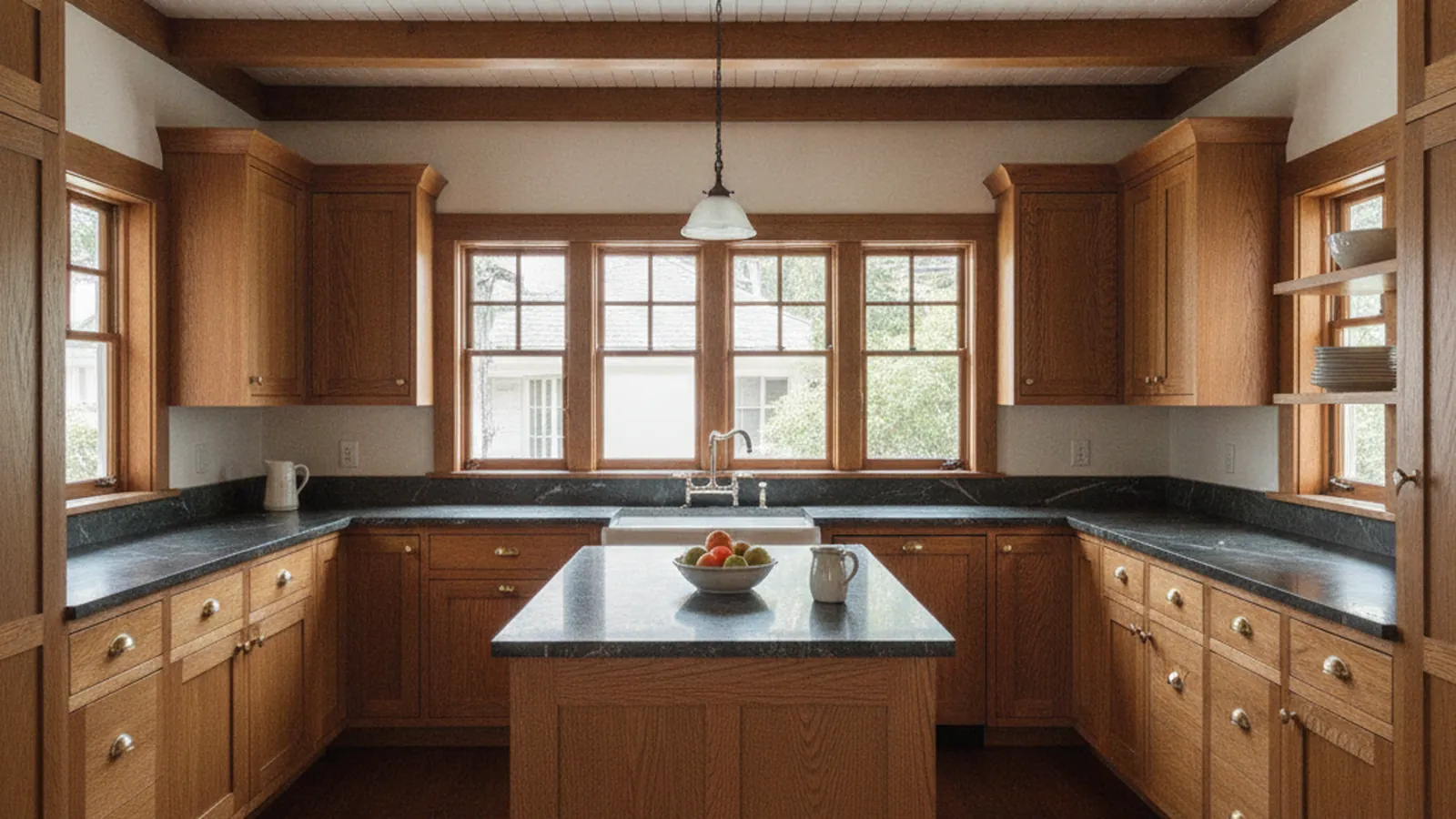
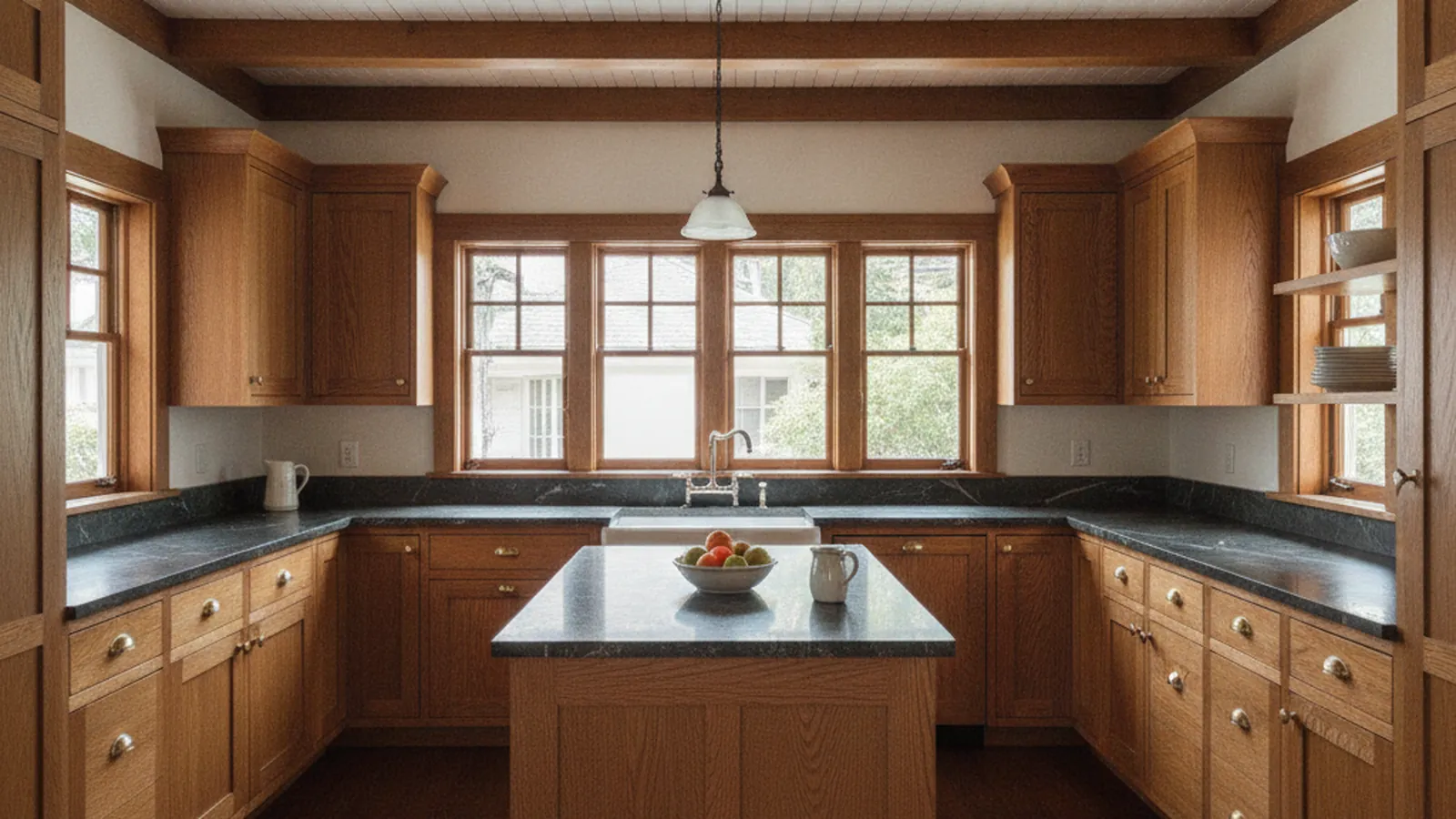
Everything we build for Professorville is inset face-frame cabinetry, because that is what the period expects and what the rest of the house already shows. Doors and drawer fronts sit flush inside a hardwood frame, flat-panel, with the frame width and the crown and casing profiles taken from the house itself. For a Craftsman interior the natural choice is stained quartersawn white oak, which carries the ray fleck the style is known for and sits comfortably beside fir trim. For a shingle or Colonial Revival house a hand-applied painted finish over a stable substrate is right, in a color drawn from the existing woodwork rather than from a trend. Glazed upper doors, a plate rail, and a built-in bench with storage under it are all period moves that also happen to be useful.
Construction is frame-and-panel with floating panels, veneer-core plywood boxes, dovetailed solid-wood drawers on full-extension soft-close slides, and unlacquered brass or bronze hardware that darkens with age. The Peninsula climate is mild, so seasonal wood movement is a modest concern in Palo Alto compared with the valley or the mountains, but a hundred-year-old house has walls and floors that have moved plenty on their own, and the cabinetry is scribed to them on installation. Our note on installation tolerances explains how that is done.
Storage is where a small kitchen is won. Uppers run to the ceiling, bases are drawers rather than doors, the service porch or the gap beside the chimney becomes a pantry, and the island, if the room can take one, is scaled to the room rather than to a showroom.
Recovering Room in a Professorville Kitchen
- Uppers to the ceiling, with the top row glazed or used for seldom-needed pieces
- Deep drawers in every base cabinet, pots and pans stacked the way people use them
- A pantry built into the old service porch or beside the chimney
- A narrow island or a fixed table with drawers in place of a peninsula
- A counter-depth refrigerator and dishwasher behind matching panels
- A built-in sideboard carried into the dining room in the same oak or paint
What a Project Involves and Where It Starts
We start at the house. The measure in a Professorville kitchen takes longer than in a newer home, because we record the trim profiles we will match, check the floor for slope and the walls for plumb, find the chimney and the old chase, and look at the panel and the circuits. Then the design: measured drawings, wood and finish samples, and renderings you can react to. Once approved, the cabinetry goes into production in Rocklin, and our crew returns to install it and scribe it to the house.
Projects start at $25,000. A kitchen with a pantry wall, appliance panels, and a built-in dining piece lands above that, and a remodel that moves utilities or walls adds the cost of that work. A custom kitchen is a multi-month process from first drawing to final install, and we put real numbers to your scope after the measure.
The neighborhoods next door share the same city and much of the same housing stock: Old Palo Alto directly to the south and Crescent Park across University Avenue. For the rest of the Peninsula, see our Silicon Valley hub.
Professorville Kitchen & Cabinetry FAQs
Questions owners of Professorville houses ask before a kitchen project, answered from the facts on this page.
Will replacing my kitchen cabinetry in Professorville trigger historic review?
On its own, no. Professorville is a National Register historic district, listed in 1979, and the City of Palo Alto applies its own design guidelines to exterior work there: facades, windows, rooflines, and additions. Cabinetry inside an existing kitchen does not change any of that, so it stays the owner’s decision. Review begins where a remodel enlarges a window, moves an exterior wall, or adds on; confirm current guidelines with the city for any exterior scope.
Who issues the permit, and will I need one?
The City of Palo Alto, through its Planning and Development Services department. A like-for-like cabinetry replacement with no change to plumbing, gas, electrical, or structure generally needs no permit; moving the sink, adding circuits, or opening a wall does. In a house of this age the electrical often forces the question, and we flag it at the measure.
The kitchen is tiny. Can custom cabinetry make it work without an addition?
Usually, yes. Professorville kitchens were built small as working rooms, and most of the space in them is wasted by the layout rather than missing. Uppers to the ceiling, deep drawers in every base, a pantry built into the old service porch, and a scaled island or fixed table in place of a peninsula recover more room than owners expect. If the house genuinely needs more, an addition is a separate question with its own review.
What wood and finish suit a Craftsman or shingle house?
Stained quartersawn white oak is the native choice for a Craftsman interior and sits well against Douglas fir trim; a painted inset kitchen suits the shingle and Colonial Revival houses, in a color drawn from the existing woodwork. Doors are inset, flat panel, in a face frame whose width matches the casing. Hardware is unlacquered brass or bronze that will darken with the house.
What does a Professorville kitchen cost, and how long does it take?
Projects start at $25,000; larger scopes land above that, and moving utilities or walls adds the cost of that work. The cabinetry is built for your room in Rocklin and installed by our own crew, so a custom kitchen is a multi-month process. PineWood Cabinets is a licensed California contractor (CSLB License #1095293) operating as a division of Voronenko & Ethen Associates, building custom cabinetry since 2006.
Explore Our Professorville Kitchen Services
Nearby Areas We Serve
Signature Services
Trusted resources: National Kitchen & Bath Association · Architectural Woodwork Institute · CA Contractors State License Board
Let’s Begin
Ready to Plan Your Professorville Kitchen?
Tell us about the house and the room. We will measure it, design cabinetry that belongs to a historic Palo Alto home, build it in Rocklin, and install it with our own crew. Call +1-650-855-2231 or schedule a consultation to begin.