Materials Guide | Published January 21, 2026
White Oak Cabinets: The New Luxury Home Standard
How a humble hardwood became the defining material of high-end kitchens—and how to specify it so it looks timeless, not trendy.
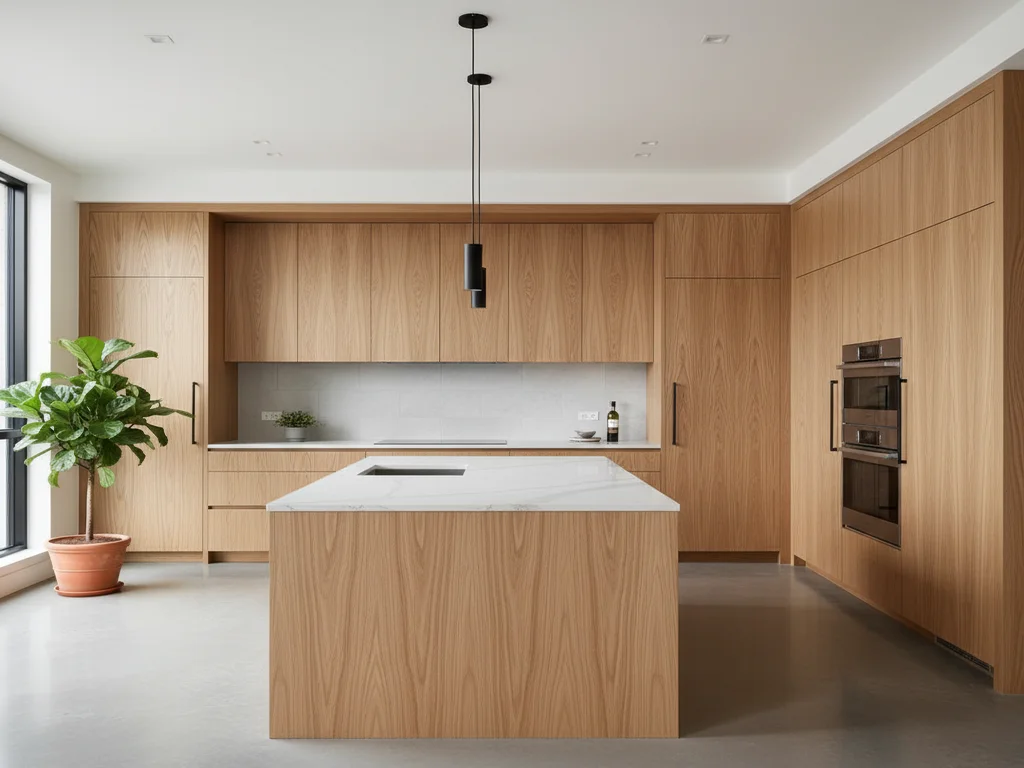
Walk through almost any recently finished luxury kitchen and you’ll see it: warm, straight-grained, honey-to-greige wood that looks calm and expensive at the same time. That’s white oak, and over the past several years it has quietly become the default hardwood of high-end design. It replaced the dark walnut of the 2010s and the painted-white-everything era before it—not because it’s fashionable, but because it solves a real problem: how to bring natural warmth into a clean, modern kitchen without it feeling rustic or dated.
Four reasons designers keep specifying it
Why White Oak Won
1. It’s genuinely versatile
White oak reads modern in a flat-slab door and traditional in a Shaker frame. Left pale and natural it feels Scandinavian; with a deeper finish it leans warm and transitional. Few woods move that easily between styles.
2. The grain is restrained
Compared to red oak’s busy, pink-toned grain, white oak is tighter, straighter, and more neutral. That calmness is exactly what makes it feel high-end rather than builder-grade.
3. It’s hard and stable
White oak is a dense, durable hardwood that stands up to the daily abuse of a working kitchen. It also takes finishes predictably, which matters enormously for getting a consistent color across a large run of cabinetry.
4. It ages gracefully
Natural wood tones don’t fall out of fashion the way a specific paint color can. A well-finished white oak kitchen looks intentional a decade later.
The single biggest factor in how your cabinets look
The Cut Is Everything: Rift, Quarter, and Plain Sawn
This is the part most homeowners have never heard of, and it matters more than the finish color. How a log is cut determines the grain pattern you see on the door—and white oak is dramatic in this respect.
Rift Sawn
Cut to produce long, straight, consistent vertical grain with almost no flecking. This is the look behind most of those serene modern kitchens—clean lines, no surprises. It’s the most wasteful cut to produce, so it’s also the most expensive.
Quarter Sawn
Straight grain plus distinctive “ray fleck”—shimmering, irregular figure that’s prized in Arts & Crafts and traditional work. Beautiful, but a strong visual statement.
Plain Sawn
The most common and economical cut, with the familiar cathedral or “flame” grain pattern. Warmer and more casual; the right choice for some styles, but not the seamless modern look people often have in mind.
If you’ve been saving photos of those magazine-perfect modern oak kitchens, you’re almost certainly looking at rift sawn white oak. Knowing that one term before your design consultation will save a lot of confusion—and help you budget honestly, because rift commands a real premium over plain sawn.
The goal is to protect, not to disguise
Finishing White Oak Without Ruining It
White oak has one quirk worth knowing: it contains tannins that can react with certain finishes and pull warm, yellow, or even greenish tones out of the wood. Achieving that coveted pale, neutral “raw” look actually takes skill—it usually means a carefully chosen clear or hardwax-oil finish, sometimes with a tone added to counteract the natural warming. A good finisher will make samples on your actual wood, because the same product can look different from one batch to the next.
Popular directions include a near-clear matte finish that keeps the wood pale and natural; a soft greige or “weathered” tone; or fumed and reactive finishes that deepen the oak to a rich brown. Hardwax oils give a low-sheen, touchable surface that’s easy to spot-repair, while a quality conversion varnish offers a tougher, more washable film. There’s no single right answer—only the one that suits how you live.
A few principles that keep oak timeless
How to Use It So It Doesn't Date
- Mix it, don’t drown in it. The most enduring kitchens pair white oak with a painted or neutral element—an island in a soft color, painted perimeter cabinets, or stone—rather than wrapping every surface in wood.
- Respect the grain direction. On a luxury build, grain is run intentionally and often matched across adjacent doors. That continuity is a quiet hallmark of custom work.
- Choose the cut for the style. Rift for modern and seamless; quarter for character; plain for warm and casual. Mismatching cut to style is the most common misstep.
- Keep hardware simple. Oak’s natural beauty does the work—understated pulls or integrated edges let it speak.
White oak earned its place at the top of the luxury kitchen palette because it’s beautiful, durable, and flexible enough to suit almost any home. But the difference between a white oak kitchen that looks like a designer showpiece and one that looks ordinary comes down to the details—the cut, the grain matching, and a finish developed specifically for your wood. Those are exactly the things a custom cabinetmaker is built to get right.
Explore
Plan Your Custom Kitchen
Related Reading
Trusted Resources
Frequently Asked Questions
- Why is white oak so popular for luxury kitchen cabinets?
- White oak became the default hardwood of high-end kitchen design because it solves a real problem: bringing natural warmth into a clean, modern kitchen without feeling rustic or dated. It is genuinely versatile — modern in a flat-slab door, traditional in a Shaker frame — with restrained, straight grain that reads calm rather than busy, plus the hardness and stability to handle daily kitchen use and take finishes predictably.
- What is the difference between rift sawn, quarter sawn, and plain sawn white oak?
- The cut determines the grain pattern on the door. Rift sawn produces long, straight, consistent vertical grain with almost no flecking — the look behind most serene modern oak kitchens — but it is the most wasteful cut to produce and therefore the most expensive. Quarter sawn adds distinctive shimmering “ray fleck” prized in Arts and Crafts work, while plain sawn is the most common and economical cut, with a warmer, more casual cathedral or “flame” grain pattern.
- How is white oak finished to keep that pale, natural look?
- White oak contains tannins that can react with certain finishes and pull warm, yellow, or even greenish tones out of the wood, so achieving the coveted pale “raw” look usually means a carefully chosen clear or hardwax-oil finish, sometimes with a tone added to counteract the natural warming. A good finisher makes samples on the actual wood, since the same product can look different from one batch to the next; hardwax oils give a low-sheen surface that is easy to spot-repair, while conversion varnish offers a tougher, more washable film.
- How do you keep a white oak kitchen from looking dated?
- The most enduring kitchens mix white oak with a painted or neutral element — an island in a soft color, painted perimeter cabinets, or stone — rather than wrapping every surface in wood. Matching the cut to the style matters too: rift sawn for modern and seamless, quarter sawn for character, plain sawn for warm and casual. Intentional grain direction matched across adjacent doors and simple, understated hardware round out the timeless look.
Continue Reading
Related Guides
More in This Guide
Related Reading
Continue Learning
Planning a kitchen and want to talk it through with the person who will build it?
Request a Design Consultation