Materials Guide | Published May 5, 2026
Best Woods for Luxury Cabinetry: How to Choose
There's no single 'best' wood—only the best wood for your project. Here's the framework designers use to choose, instead of a list to memorize.
Search “best wood for cabinets” and you’ll get a dozen lists ranking species as if one could simply win. That’s the wrong question. The walnut that’s perfect for a moody modern library would be an expensive mistake under bright white paint. The right approach isn’t memorizing a ranking—it’s asking four questions about your project and letting the answers point to the species. This guide gives you that framework, plus a quick reference on how the leading woods actually behave.
Answer these and the wood almost chooses itself
The Four Questions That Decide
1. Painted or natural?
This is the first fork. If the cabinetry will be painted, you don’t want beautiful grain—you want a smooth, tight, stable surface that takes paint flawlessly. If you want to show the wood, grain and color become the whole point, and you choose entirely differently.
2. What style and color story?
Calm and modern points toward straight, neutral grain. Rich and traditional welcomes warmer tones and more character. Rustic invites knots and movement. The wood should reinforce the mood, not fight it.
3. How hard will it be used?
A busy family kitchen rewards hard, dense species; a formal display cabinet has gentler demands. Softer woods dent more easily—sometimes that patina is charming, sometimes it’s a problem.
4. What’s the budget?
Species range widely in cost, and the cut can matter as much as the species. Knowing your range keeps the conversation honest and the options realistic.
A quick reference, framed by the questions above
How the Leading Woods Behave
White Oak
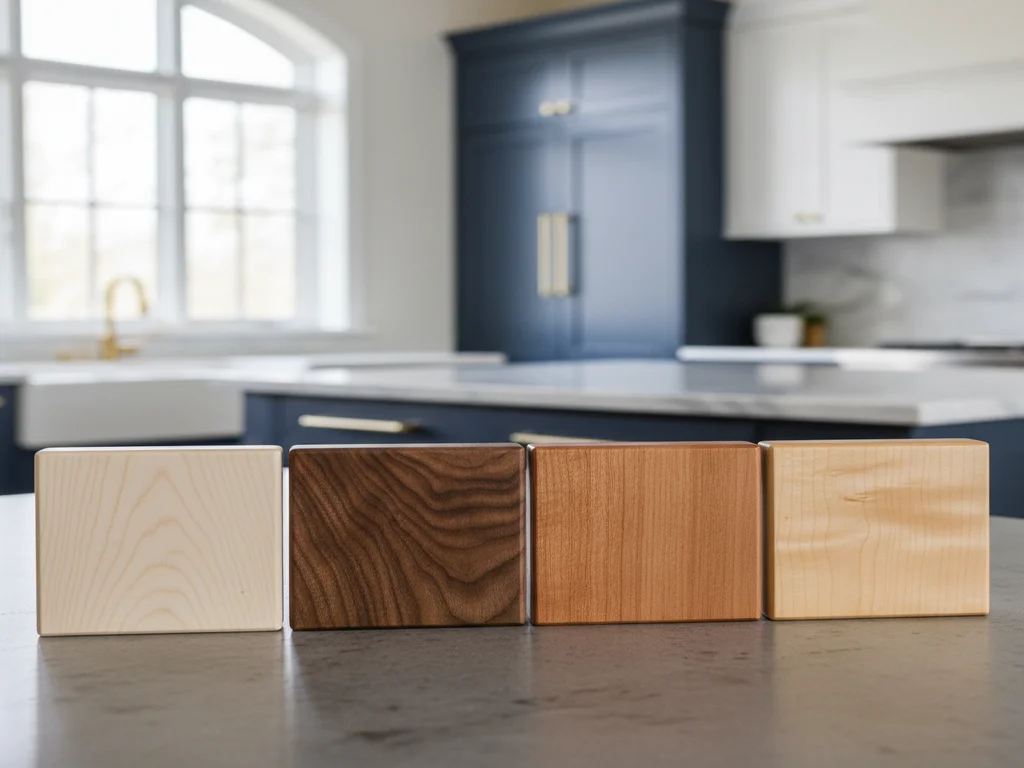
The current favorite for natural finishes. Hard, durable, with restrained straight grain that suits modern and transitional kitchens. The cut (rift, quarter, plain) dramatically changes the look. Best when you want to show warm, calm wood.
Walnut
The luxury statement wood—deep chocolate tones and flowing grain. Softer than oak, so better suited to lower-impact areas or owners who welcome a lived-in patina. Usually the premium choice for natural finishes; stunning in libraries, islands, and feature cabinetry.
Maple
Hard, with a tight, subtle grain. Its real strength is as a paint-grade wood—smooth and stable for a flawless painted finish—and it’s a workhorse for durable, understated cabinetry.
Cherry
Smooth, elegant, and famous for darkening richly with age. A classic for warm, traditional rooms—just know and embrace that it will deepen over time.
Paint-grade species (poplar, soft maple)
When the surface is going to be painted, the right move is often a stable, tight-grained species selected for paint—not an expensive figured wood whose beauty you’ll cover anyway. Spending on walnut to paint it is the most common material misstep.
Exotic and figured woods
For a true showpiece, figured and exotic species deliver drama—at a premium and with extra care in sourcing and finishing. Best reserved for focal pieces rather than an entire kitchen.
Don't pay for what you'll hide
The Trap to Avoid
The single most common—and expensive—mistake is mismatching the wood to its finish: paying for a gorgeous figured species and then painting over it, or choosing a bargain wood for a clear finish and being disappointed when the grain looks flat. Answer the painted-or-natural question first, and most of the budget waste disappears.
The right partner makes this easy
Match the Wood to the Project
Choosing well isn’t about finding the “best” wood; it’s about matching species, cut, and finish to how you’ll live with the cabinetry. The most reliable way to get there is to look at real samples—finished, in your light—and talk through the trade-offs with a cabinetmaker who works in all of these woods every day. The right species, chosen for the right reasons, is what makes custom cabinetry feel inevitable rather than expensive.
Explore
Choose Your Materials
Related Reading
Trusted Resources
Frequently Asked Questions
- What is the best wood for luxury cabinetry?
- There is no single best wood, only the best wood for a specific project. The choice follows four questions: whether the cabinetry will be painted or show natural wood, what style and color story the room calls for, how hard the cabinets will be used, and what the budget allows. Answer those and the species almost chooses itself.
- What is the difference between white oak and walnut cabinets?
- White oak is hard and durable with restrained straight grain that suits modern and transitional kitchens, and the cut, whether rift, quarter, or plain, dramatically changes its look. Walnut is the luxury statement wood, with deep chocolate tones and flowing grain, but it is softer than oak, so it is better suited to lower-impact areas or owners who welcome a lived-in patina, and it is usually the premium choice for natural finishes.
- What wood is best for painted cabinets?
- Painted cabinetry calls for a smooth, tight, stable surface rather than beautiful grain, so paint-grade species such as maple, poplar, and soft maple are the right choice. Hard maple in particular is a workhorse, with a tight, subtle grain that takes paint flawlessly. Paying for an expensive figured wood like walnut and then painting over it is the most common material misstep.
- Does cherry wood cabinetry change color over time?
- Yes, cherry is famous for darkening richly with age, and that deepening should be known and embraced going in. Its smooth, elegant character makes it a classic choice for warm, traditional rooms.
Continue Reading
Related Guides
More in This Guide
Related Reading
Continue Learning
Planning a kitchen and want to talk it through with the person who will build it?
Request a Design Consultation