Design Insights
Marin County Kitchens: Wine Country Elegance
Discover marin county kitchens: wine country elegance tailored to California's diverse luxury home markets.
Where Sophisticated Living Meets Wine Country Warmth
Marin County Kitchen Design
Marin County occupies a unique position in California's luxury landscape. Just across the Golden Gate Bridge from San Francisco, its communities—Tiburon, Mill Valley, Ross, Kentfield, Belvedere, and Larkspur—attract homeowners who want the cultural sophistication of city life with the natural beauty and space of the North Bay. This duality defines Marin's kitchen design aesthetic: refined but relaxed, polished but never pretentious, with a deep appreciation for quality food, fine wine, and the art of gathering.
Our Marin County projects consistently reflect a design philosophy that we call "wine country elegance"—spaces that feel as appropriate for hosting a dinner party with a carefully selected Pinot Noir from Sonoma as they do for Saturday morning pancakes with the kids. The materials are natural and warm, the layouts are designed for both serious cooking and casual entertaining, and the details are exquisite without being ostentatious. It is a difficult balance to achieve, and it is what makes Marin kitchen design so rewarding.
What follows is our perspective on what makes Marin County kitchens distinctive—the design elements, material choices, and lifestyle accommodations that set them apart from kitchens in other California regions. For a neighboring regional perspective, see our article on Napa Valley kitchen design.
The Marin Aesthetic: Natural Sophistication
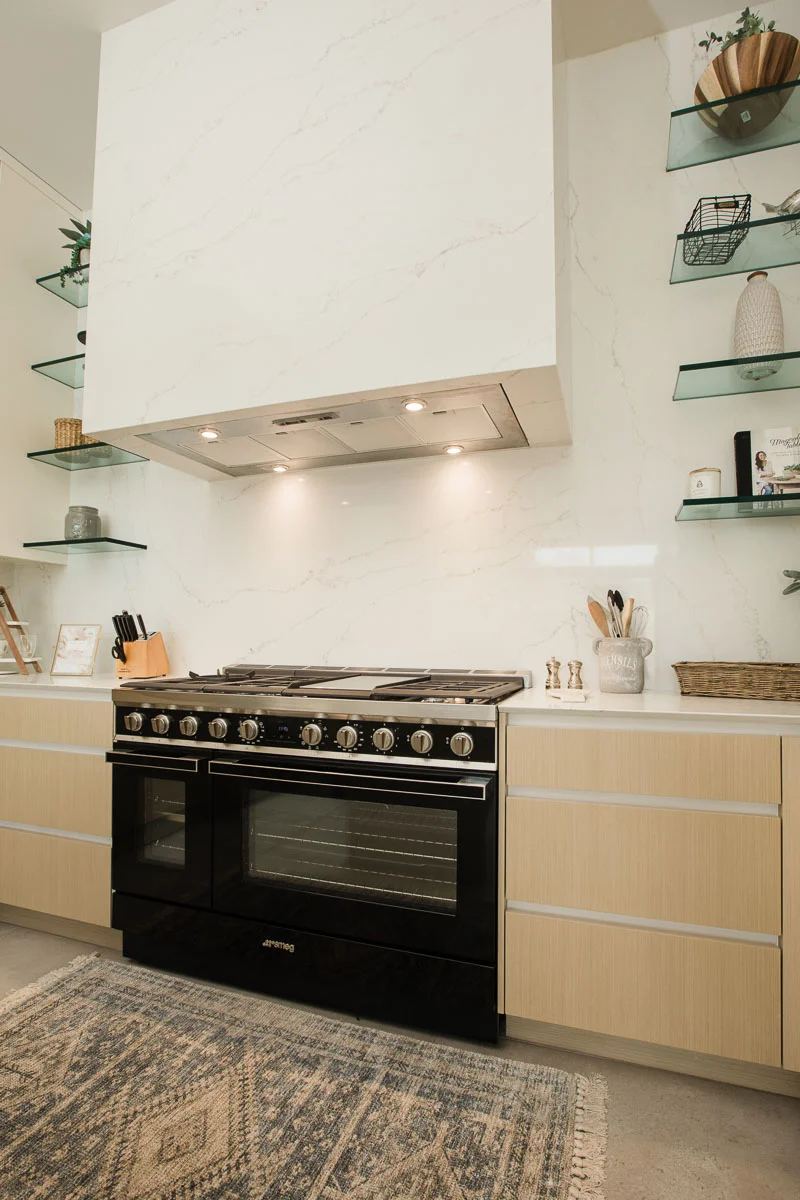
Marin homeowners tend toward a specific design sensibility that blends the organic warmth of Northern California with the tailored precision of European design. The cabinetry in a typical Marin luxury kitchen features natural wood—usually white oak or walnut—finished to reveal and celebrate the grain rather than conceal it beneath heavy paint or opaque stain. Wire-brushed white oak in a warm honey or driftwood tone is perhaps the quintessential Marin cabinet finish, evoking the weathered wood of local barns and wharfs while maintaining a clean, contemporary sophistication.
The color palette draws from the landscape: the soft grays of morning fog, the warm golds of summer hillsides, the deep greens of redwood forests, and the cool blues of Richardson Bay. We translate these into cabinet finishes, stone selections, and accent materials that create kitchens deeply rooted in their setting. Picture a Mill Valley hillside kitchen with cerused white oak cabinetry paired with a Calacatta Borghini marble island and hand-forged bronze hardware—a combination that feels both luxurious and entirely natural in its setting.
Indoor-Outdoor Kitchen Flow
Marin's temperate climate—cool, foggy mornings giving way to warm, sunny afternoons for much of the year—makes indoor-outdoor living a central design consideration. Many of our Marin kitchens feature multi-slide door systems (La Cantina, Nana Wall, or Fleetwood) that open the kitchen entirely to an outdoor dining terrace, garden, or deck. When these doors open, the kitchen effectively doubles in size, and the design must work as both an enclosed room and an open-air pavilion.
For cabinetry adjacent to sliding door openings, we use UV-resistant finishes and recommend species that are particularly stable in variable humidity—the transition zone between indoor and outdoor gets significant moisture and temperature variation. We also design outdoor cabinet extensions that share the same material language as the interior kitchen—matching wood species and finishes on outdoor cabinetry housing a built-in grill, beverage center, and storage—creating a seamless visual connection between inside and out.
Wine Storage and Entertaining Infrastructure
Proximity to Sonoma and Napa wine regions means that Marin homeowners are, almost universally, serious about wine. Most of our Marin kitchen projects include substantial wine storage—from built-in 24-inch dual-zone wine refrigerators (Sub-Zero and Thermador are the most requested brands) to dedicated walk-in wine rooms adjacent to the kitchen. For kitchen-integrated storage, we build custom wine racks into island end panels, above-cabinet display areas, and dedicated wine cabinets with individually sized compartments for Burgundy, Bordeaux, and Champagne bottles.
The entertaining infrastructure extends beyond wine. Marin kitchens frequently include built-in espresso machines (Miele or Gaggenau built-in units concealed behind cabinet panels), dedicated cheese and charcuterie prep areas with marble surfaces, and sophisticated beverage stations with ice makers, sparkling water systems, and extensive glassware storage. Our wine storage solutions article explores these options in greater depth.
Farm-to-Table Design Elements
Marin County has one of California's most vibrant farm-to-table food cultures, anchored by the famous Marin County Farmers Market and local producers like Cowgirl Creamery, Straus Family Creamery, and Star Route Farms. This food-centric lifestyle influences kitchen design in specific ways. Our Marin clients often request herb garden integration—indoor growing stations built into window alcoves or under-cabinet systems with dedicated LED grow lights. They want generous prep areas for washing and prepping large quantities of market-fresh produce, and they want beautiful display storage for artisan pantry goods.
We design extra-large workstation sinks (36 inches or wider) for our Marin projects to accommodate the washing and sorting that farm-market hauls require. Pull-out compost bins are standard—California's SB 1383 requires organic waste collection statewide, and Marin households embrace it. We also build dedicated spaces for preservation activities: canning shelving in the pantry, fermentation vessel storage, and generous counter areas for bread-making and pastry work. The Marin kitchen is a working kitchen for people who take real pleasure in the craft of cooking.
Sustainability as a Design Principle
Marin County has been at the forefront of environmental consciousness for decades, and this extends deeply into kitchen design. Our Marin clients consistently request FSC-certified wood, zero-VOC finishes, and locally sourced materials. We have built kitchens using reclaimed old-growth redwood salvaged from Marin barns, white oak from sustainable California forestry operations, and even bamboo and eucalyptus from Bay Area sources. Learn about our broader commitment to sustainable luxury design.
Energy-efficient appliances are non-negotiable—induction cooktops, heat-pump dishwashers, and energy-star rated refrigeration are standard specifications. LED lighting integrated into all cabinetry reduces energy consumption while providing superior illumination. Water-saving fixtures, including touchless faucets that reduce water waste and recirculating hot water systems that eliminate the wait for hot water, reflect Marin's deep commitment to resource conservation.
Designing kitchens in Marin County is a privilege that we approach with respect for both the community's values and its extraordinary setting. Every project is an opportunity to create a space where beautiful design, exceptional craftsmanship, and environmental responsibility come together around the table. Contact us to discuss your Marin County kitchen project.
Continue exploring kitchen design excellence
Related Articles
Frequently Asked Questions
- What defines Marin County kitchen design style?
- Marin County kitchens follow a philosophy of wine country elegance — refined but relaxed, polished but never pretentious, equally suited to a dinner party with a Sonoma Pinot Noir or Saturday morning pancakes with the kids. The aesthetic blends the organic warmth of Northern California with tailored European precision, and cabinetry typically features natural wood like white oak or walnut finished to celebrate the grain rather than conceal it.
- What cabinet finish is most popular in Marin County luxury kitchens?
- Wire-brushed white oak in a warm honey or driftwood tone is perhaps the quintessential Marin cabinet finish, evoking the weathered wood of local barns and wharfs while maintaining clean, contemporary sophistication. The broader color palette draws from the landscape — soft fog grays, warm hillside golds, redwood-forest greens, and the cool blues of Richardson Bay.
- How do Marin kitchens handle indoor-outdoor living?
- Marin’s temperate climate of cool foggy mornings and warm sunny afternoons makes indoor-outdoor flow central: many kitchens use multi-slide door systems from La Cantina, Nana Wall, or Fleetwood that open the kitchen entirely to an outdoor terrace, effectively doubling its size. Cabinetry near these openings gets UV-resistant finishes and humidity-stable species, and outdoor cabinet extensions can match the interior’s wood species and finishes for a seamless connection.
- What wine storage do Marin County kitchens typically include?
- With Sonoma and Napa nearby, most Marin kitchen projects include substantial wine storage — from built-in 24-inch dual-zone wine refrigerators (Sub-Zero and Thermador are the most requested brands) to dedicated walk-in wine rooms adjacent to the kitchen. Kitchen-integrated options include custom racks in island end panels, above-cabinet displays, and wine cabinets with individually sized compartments for Burgundy, Bordeaux, and Champagne bottles.
- How does Marin’s farm-to-table culture influence kitchen design?
- Marin’s food culture — anchored by the Marin County Farmers Market and producers like Cowgirl Creamery, Straus Family Creamery, and Star Route Farms — shapes kitchens with extra-large workstation sinks 36 inches or wider for washing market produce, indoor herb growing stations, and display storage for artisan pantry goods. Pull-out compost bins are standard since California’s SB 1383 requires organic waste collection statewide, and dedicated spaces support canning, fermentation, and bread-making.
Continue Reading
Related Guides
More in This Guide
Related Reading
Continue Learning
Planning a kitchen and want to talk it through with the person who will build it?
Request a Design Consultation