Design Guide | Published April 7, 2026
Designing a Chef's Kitchen: Layout, Materials & Workflow
A chef's kitchen isn't about more gadgets—it's about a space engineered around how cooking actually happens. Here's how to design one.
“Chef’s kitchen” gets used loosely in real estate listings—usually meaning little more than a big range and stone counters. A real chef’s kitchen is something else: a space designed around the actual sequence of cooking, where every tool, ingredient, and surface is where your hand expects it during the heat of preparing a meal. The difference isn’t how much you spend on appliances. It’s how intelligently the space is organized. Here’s how serious cooking kitchens are designed.
The mental model that drives everything
Start With Work Zones, Not Rooms
Professional kitchens are organized into stations, and the home version borrows the idea. Rather than thinking “cabinets and counters,” think in zones, each with its tools and storage right at hand:
Prep zone: generous uninterrupted counter, a prep sink, knives, boards, bowls, and compost/trash within a step.
Cooking zone: the range and hood, with oils, spices, pots, and utensils stored immediately beside it.
Cleanup zone: the main sink and dishwasher, with bins and everyday dishes close by.
Storage zone: refrigeration and pantry, ideally near the entry so groceries unload efficiently.
When these zones are placed in the order you actually use them—store, prep, cook, plate, clean—the kitchen starts to feel effortless. When they’re scattered, even an expensive kitchen feels like a fight.
A classic rule that needs updating for big kitchens
The Work Triangle, and When to Break It
The old “work triangle”—keeping sink, range, and refrigerator in an efficient triangle—still matters in a compact kitchen. But large chef’s kitchens have outgrown it. Once a space is big enough, a single triangle means too much walking, and the better model is multiple zones (often called the “work station” approach) with their own mini-triangles. The principle underneath both is unchanged: minimize unnecessary steps between the things you use together.
Separating prep from people
The Case for Two Islands
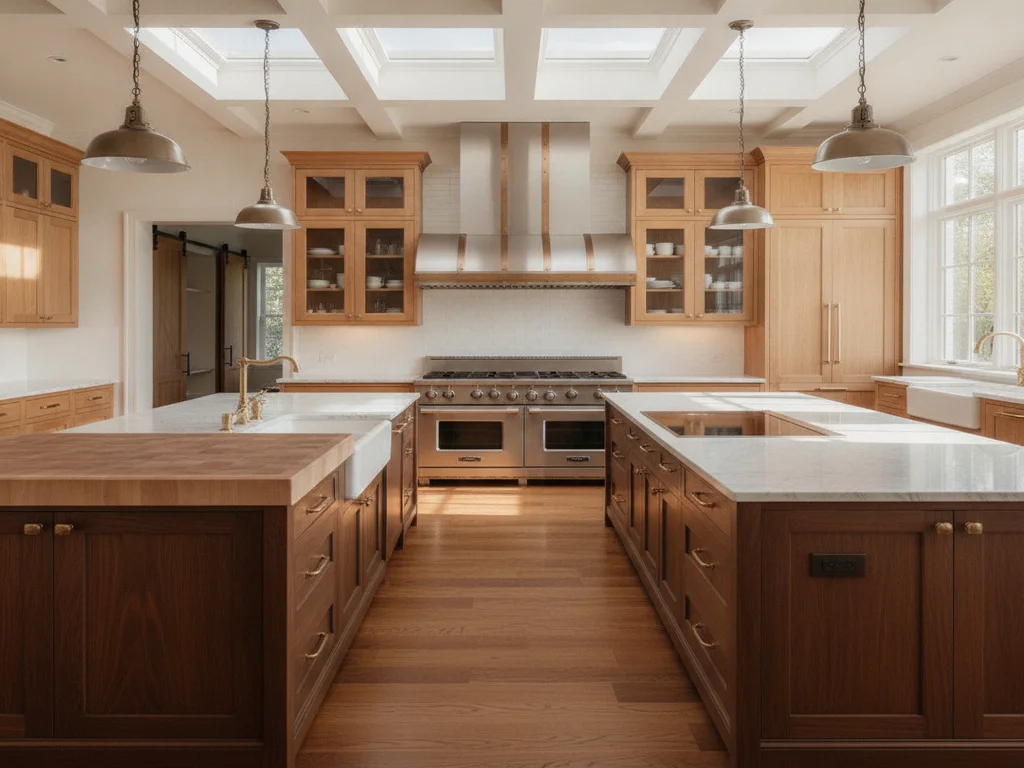
The signature feature of many high-end cooking kitchens is a pair of islands—one for working, one for gathering. The work island carries the prep sink and serious counter space and stays clear for cooking; the second island is for seating, serving, and the inevitable crowd that forms wherever food is being made. The split keeps guests close without putting them in the cook’s path. Where a second island won’t fit, a dedicated prep zone along the perimeter accomplishes the same separation.
What powerful appliances actually require
Pro-Grade Considerations
Serious appliances make demands the rest of the kitchen has to answer. A high-output range needs genuinely effective ventilation—properly sized and ducted to the outside, not a token hood—or the whole house pays for it. Powerful cooking and large refrigeration may need dedicated electrical and gas provisions. And heat-producing appliances shouldn’t be crammed against tall cabinetry without clearances. None of this is glamorous, but planning it early is the difference between equipment that performs and equipment that disappoints.
Built to be used hard
Materials That Earn Their Place
A working kitchen needs surfaces and storage that shrug off real use. That means durable, low-fuss countertops in the prep and cooking zones; cabinetry built with solid construction and premium soft-close, full-extension hardware that survives thousands of cycles; and finishes chosen to be cleaned, not coddled. The luxury here is reliability—drawers that glide when full, a finish you can wipe down without worry, and storage that holds heavy cookware without sagging.
The details that separate a chef's kitchen from a pretty one
Storage Designed Around Cooking
- Deep drawers, not low shelves, for pots and pans—you see and reach everything without crouching.
- Knives, boards, and utensils at the prep counter in dedicated drawers and inserts.
- Spices and oils beside the range in slim pull-outs, not across the room.
- A landing surface on both sides of the range and the refrigerator so hot pans and ingredients always have a home.
- A pantry or back kitchen to absorb bulk storage and small-appliance clutter, keeping work surfaces clear.
That last layer—storage planned around the precise way you cook—is where custom cabinetry pays off most. Off-the-shelf kitchens organize around standard boxes; a chef’s kitchen organizes around the cook. The reward is a space that quietly does what you need without your ever thinking about it, which is exactly what the best kitchens have in common.
Explore
Design Your Chef's Kitchen
Frequently Asked Questions
- What makes a kitchen a true chef’s kitchen?
- A real chef’s kitchen is a space designed around the actual sequence of cooking, where every tool, ingredient, and surface is where your hand expects it during meal preparation — not just a big range and stone counters, as the term is loosely used in real estate listings. The difference is not how much you spend on appliances but how intelligently the space is organized.
- What are the work zones in a chef’s kitchen?
- A chef’s kitchen borrows the station concept from professional kitchens and organizes into four zones: a prep zone with generous uninterrupted counter, a prep sink, and knives, boards, and compost within a step; a cooking zone at the range and hood with oils, spices, pots, and utensils stored immediately beside it; a cleanup zone with the main sink and dishwasher; and a storage zone with refrigeration and pantry, ideally near the entry. When the zones follow the order you actually cook in — store, prep, cook, plate, clean — the kitchen feels effortless.
- Does the kitchen work triangle still matter?
- The classic work triangle — keeping sink, range, and refrigerator in an efficient triangle — still matters in a compact kitchen, but large chef’s kitchens have outgrown it. Once a space is big enough, a single triangle means too much walking, and the better model is multiple work zones, each with its own mini-triangle. The underlying principle is unchanged: minimize unnecessary steps between the things you use together.
- Why do chef’s kitchens often have two islands?
- The two-island arrangement separates working from gathering: the work island carries the prep sink and serious counter space and stays clear for cooking, while the second island handles seating, serving, and the crowd that forms wherever food is being made. The split keeps guests close without putting them in the cook’s path; where a second island won’t fit, a dedicated prep zone along the perimeter accomplishes the same separation.
- What do pro-grade kitchen appliances require from the rest of the kitchen?
- A high-output range needs genuinely effective ventilation — properly sized and ducted to the outside, not a token hood. Powerful cooking equipment and large refrigeration may need dedicated electrical and gas provisions, and heat-producing appliances should not be crammed against tall cabinetry without clearances. Planning these requirements early is the difference between equipment that performs and equipment that disappoints.
Continue Reading
Related Guides
More in This Guide
Related Reading
Continue Learning
Planning a kitchen and want to talk it through with the person who will build it?
Request a Design Consultation