
Complete Guide to Cabinet Wood Types
Wood Species Guide
Learn about different wood species for kitchen cabinets, their characteristics, and how to choose the right wood for your custom cabinets. From oak to walnut, discover the perfect wood for your kitchen.
Or call (650) 855-2231 · Mon-Fri 9 AM-6 PM, Sat 10 AM-4 PM PT
Choosing the Right Wood for Your Cabinets
The choice of wood species is one of the most important decisions when designing custom kitchen cabinets. Each wood type has unique characteristics, colors, and grain patterns that can significantly impact the look and feel of your kitchen.
Cabinet Wood Species Compared
Hardness, density, movement and paintability for nine common cabinet woods, ordered hardest to softest. All values are from the USDA Forest Products Laboratory Wood Handbook (FPL-GTR-190).
| Species | Side hardness (lbf) | Specific gravity | Tangential shrinkage (%) | Paintability | Grain |
|---|---|---|---|---|---|
| Hickory (shagbark) | 1,880 | 0.72 | 10.5 | III | Ring-porous |
| Hard maple (sugar) | 1,450 | 0.63 | 9.9 | I | Diffuse-porous |
| White oak | 1,360 | 0.68 | 10.5 | III | Ring-porous |
| Red oak (northern) | 1,290 | 0.63 | 8.6 | III | Ring-porous |
| Black walnut | 1,010 | 0.55 | 7.8 | II | Semi-ring-porous |
| Black cherry | 950 | 0.50 | 7.1 | I | Diffuse-porous |
| Red alder | 590 | 0.41 | 7.3 | I | Diffuse-porous |
| Ponderosa pine | 460 | 0.40 | 6.2 | II | Softwood |
| Eastern white pine | 380 | 0.35 | 6.1 | I | Softwood |
Side hardness and specific gravity at 12% moisture content (Table 5-3b). Tangential shrinkage from green to ovendry (Table 4-3). Paintability for latex paint, I = easiest to III = most difficult (Table 16-1). Grain type from Table 16-1. Laboratory values for clear wood; individual boards vary.
Popular Wood Species for Kitchen Cabinets
Explore the most popular wood species used in custom kitchen cabinets and their unique characteristics.
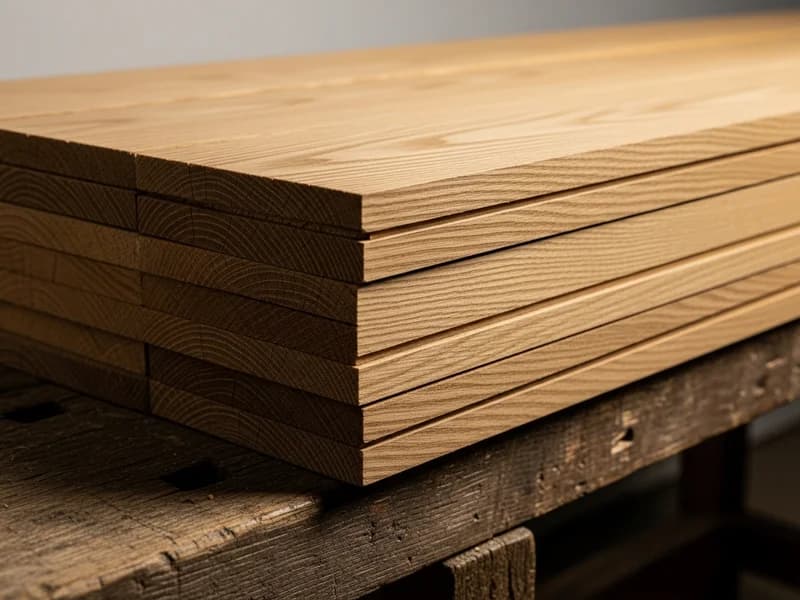
Oak
Two botanical groups are sold as oak. The Wood Handbook describes red oak heartwood as brown with a tinge of red, and white oak heartwood as generally grayish brown, with pores usually plugged with tyloses that make it close to impenetrable to liquids. Quartersawn oak shows broad, conspicuous rays.
Characteristics:
- Ring-porous: open, visible grain that shows through paint
- White oak heartwood has good decay resistance (Wood Handbook)
- Quartersawn stock shows broad, conspicuous ray fleck
- Red oak lacks tyloses, so its pores are open
- Paintability class III, the hardest group to paint smoothly
Colors:
Red oak: brown with a tinge of red, White oak: grayish brown
Side hardness:
1,360 lbf (white oak) · 1,290 lbf (northern red oak)
Tangential shrinkage:
10.5% (white oak) · 8.6% (northern red oak)
Often chosen for:
Stained or natural finishes where the grain is the point
Hard Maple
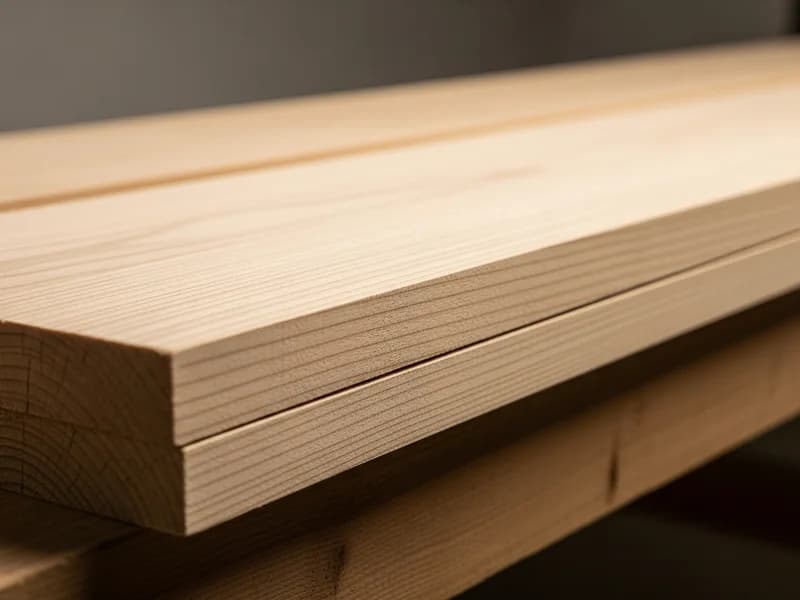
Hard maple is sugar maple and black maple. The Wood Handbook describes its heartwood as usually light reddish brown, sometimes considerably darker, with a fine, uniform texture; it is heavy, strong, stiff and hard, and has high shrinkage.
Characteristics:
- Fine, uniform texture (diffuse-porous)
- Paintability class I, the easiest group
- Heavy, strong, stiff and hard
- High shrinkage, so humidity swings matter
- Birdseye and curly figure occur in selected stock
Colors:
Light reddish-brown heartwood, White sapwood with a slight reddish-brown tinge
Side hardness:
1,450 lbf (sugar maple)
Tangential shrinkage:
9.9%
Often chosen for:
Painted doors and clean, modern profiles
Cherry
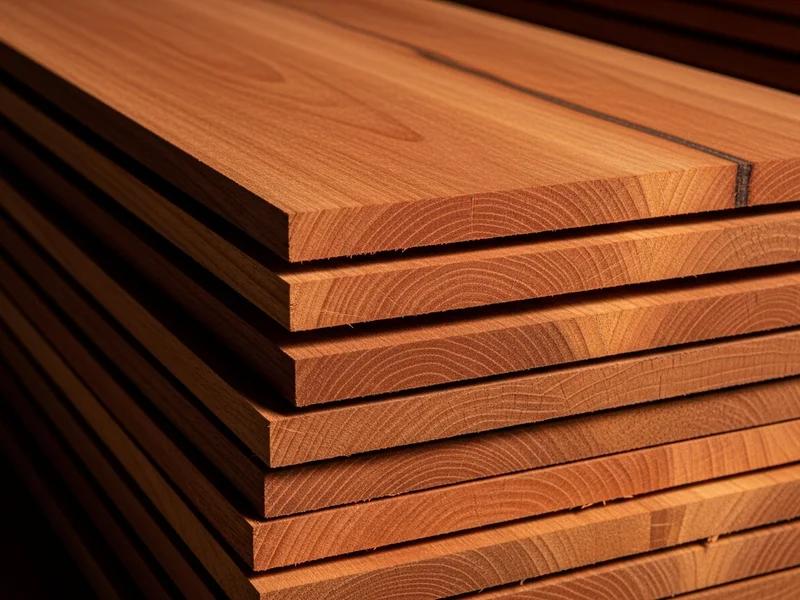
The Wood Handbook describes black cherry heartwood as varying from light to dark reddish brown with a distinctive luster, a fairly uniform texture and very good machining properties. Although it has moderately high shrinkage, it is very dimensionally stable after drying.
Characteristics:
- Distinctive luster and fairly uniform texture
- Very good machining properties
- Very dimensionally stable after drying (Wood Handbook)
- Moderately hard, with high shock resistance
- Used principally for furniture and architectural woodwork
Colors:
Light to dark reddish-brown heartwood, Nearly white sapwood
Side hardness:
950 lbf
Tangential shrinkage:
7.1%
Often chosen for:
Natural and lightly toned finishes in traditional rooms
Walnut
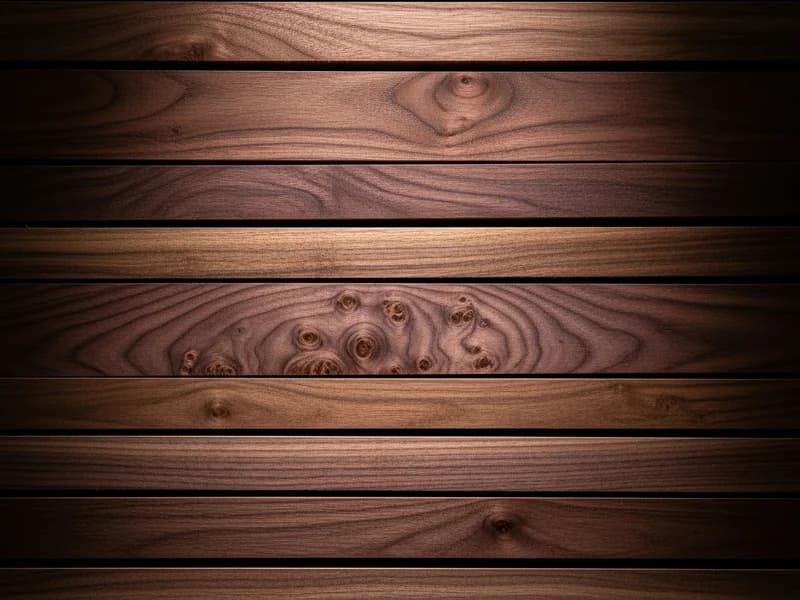
The Wood Handbook describes black walnut heartwood as light to dark brown, normally straight grained, easily worked with tools and stable in use. It is heavy, hard, strong and stiff, and the Handbook notes it is well suited for natural finishes.
Characteristics:
- Stable in use and easily worked (Wood Handbook)
- Well suited for natural finishes
- Semi-ring-porous grain
- Heavy, hard, strong and stiff
- Valued for architectural woodwork and decorative panels
Colors:
Light to dark brown heartwood, Nearly white sapwood
Side hardness:
1,010 lbf
Tangential shrinkage:
7.8%
Often chosen for:
Natural-finish slab doors, islands and accent pieces
Hickory
In the true hickory group, the Wood Handbook describes white, usually wide sapwood and reddish heartwood. The wood is exceptionally tough, heavy, hard and strong, and shrinks considerably in drying.
Characteristics:
- The hardest species on this page
- Exceptionally tough (Wood Handbook)
- Strong contrast between white sapwood and reddish heartwood
- Shrinks considerably in drying
- Paintability class III
Colors:
Reddish heartwood, White sapwood
Side hardness:
1,880 lbf (shagbark)
Tangential shrinkage:
10.5% (shagbark)
Often chosen for:
Rustic, high-contrast natural finishes
Alder
The Wood Handbook describes red alder as varying from almost white to pale pinkish brown, with no visible boundary between heartwood and sapwood. It is moderately light in weight, intermediate in most strength properties, low in shock resistance, and has relatively low shrinkage.
Characteristics:
- Even colour, no visible heartwood/sapwood boundary
- Relatively low shrinkage (Wood Handbook)
- The softest hardwood on this page
- Paintability class I
- Used for furniture, door panel stock and millwork
Colors:
Almost white to pale pinkish brown
Side hardness:
590 lbf
Tangential shrinkage:
7.3%
Often chosen for:
Stained finishes and knotty, lodge-style rooms
Pine
Pine is a softwood. The Wood Handbook lists ponderosa pine, grown mainly in Oregon, Washington and California, among the woods used for built-in cases and cabinets, with knotty ponderosa used for interior woodwork. Its heartwood is light reddish brown, it is quite uniform in texture, and it has little tendency to warp and twist. Eastern white pine heartwood is light brown, often with a reddish tinge, and darkens on exposure to air.
Characteristics:
- Softwood, much softer than any hardwood on this page
- Moderately low shrinkage (ponderosa); ranks high in stability (eastern white)
- Knotty grades used for interior woodwork and paneling
- Ponderosa is grown in California (Wood Handbook)
- Paintability class I (eastern white) to II (ponderosa)
Colors:
Ponderosa: light reddish-brown heartwood, nearly white to pale yellow sapwood, Eastern white: light brown, often with a reddish tinge
Side hardness:
460 lbf (ponderosa) · 380 lbf (eastern white)
Tangential shrinkage:
6.2% (ponderosa) · 6.1% (eastern white)
Often chosen for:
Knotty, cabin and lodge interiors where dents read as character
How to Choose the Right Wood
Follow these tips to select the perfect wood species for your kitchen cabinets.
Consider Your Style
Choose wood species that complement your kitchen’s design style. Traditional kitchens work well with oak or cherry, while modern kitchens often use maple or walnut.
Think About Maintenance
Each species is only as protected as the finish over it. Ask which finish system is specified for each surface, and how it is repaired if it is damaged.
Plan for Wood Movement
Wood shrinks and swells with humidity, and the Wood Handbook shows tangential shrinkage ranging from about 7% (cherry, alder) to over 10% (white oak, hickory) from green to ovendry. Higher-movement species need more care in door and panel construction.
Think About Durability
Side hardness measures resistance to denting. In the Wood Handbook, hickory, hard maple and the oaks are the hardest species on this page; alder is the softest.
Consider Color Preferences
Think about the color you want for your cabinets. Some woods have natural color variations, while others are more consistent.
Think About Finishing
The Wood Handbook rates fine-textured, diffuse-porous woods such as maple, cherry and alder easiest to paint, and ring-porous woods such as oak and hickory hardest, because open pores telegraph through the paint film.
Ready to Choose Your Wood?
Choosing the right wood species for your kitchen cabinets is an important decision that will impact the look, feel, and longevity of your kitchen. Our team at PineWood Cabinets is here to help you select the perfect wood for your project.
Related Resources
Premium Hardwood Guide
Luxury hardwood options and care
Shaker Cabinets Guide
Best wood species for Shaker style
Custom Kitchen Services
Build your dream kitchen with any wood
Wood Species Questions
- Are pine kitchen cabinets a good choice?
- Pine is a softwood, so it dents more easily than hardwoods: the USDA Wood Handbook gives side hardness of 460 lbf for ponderosa pine and 380 lbf for eastern white pine, against 1,360 lbf for white oak. In its favour, the Handbook lists ponderosa among woods used for built-in cases and cabinets, notes it has little tendency to warp and twist, and ranks eastern white pine high in stability. Knotty pine suits rustic and lodge interiors where wear reads as character.
- Which wood species is best for painted kitchen cabinets?
- Fine-textured, diffuse-porous woods paint most smoothly. The USDA Wood Handbook (Table 16-1) places hard maple, cherry and red alder in paintability class I, the easiest group, and the oaks and hickory in class III, because their open pores show through paint. Hard maple is the usual choice: it is also hard, at 1,450 lbf side hardness for sugar maple.
- What is the hardest wood for kitchen cabinets?
- Of the species in this guide, shagbark hickory is hardest at 1,880 lbf side hardness at 12% moisture content, followed by sugar maple (1,450 lbf), white oak (1,360 lbf) and northern red oak (1,290 lbf). Black walnut (1,010 lbf), black cherry (950 lbf) and red alder (590 lbf) are softer, and the pines softest: ponderosa 460 lbf and eastern white 380 lbf. All figures are from the USDA Forest Products Laboratory Wood Handbook, Table 5-3b.
- Which cabinet wood moves the least with humidity?
- Among the hardwoods in this guide, black cherry (7.1%) and red alder (7.3%) have the lowest tangential shrinkage from green to ovendry (the pines are lower still, about 6%), and white oak and shagbark hickory the highest (10.5%), per Wood Handbook Table 4-3. The Handbook also describes cherry as very dimensionally stable after drying and walnut as stable in use.
- What is the difference between oak and walnut cabinets?
- Oak is ring-porous with open, visible grain; the Wood Handbook describes white oak heartwood as grayish brown and red oak as brown with a tinge of red. Black walnut heartwood is light to dark brown, semi-ring-porous, and well suited to natural finishes. White oak is harder (1,360 vs 1,010 lbf) but moves more (10.5% vs 7.8% tangential shrinkage).
- What colour is cherry cabinetry?
- The Wood Handbook describes black cherry heartwood as varying from light to dark reddish brown with a distinctive luster. The Handbook does not give a figure for how much a finished cherry door will change in a kitchen, so ask your cabinetmaker to show you an older finished cherry sample next to freshly milled stock before you decide.
Planning a project?
- What custom cabinetry costs Per-linear-foot bands and what moves a price.
- Kitchen cost calculator A planning range for your layout in a minute.
- Bespoke Cabinetry Scope, process and where we build it.
- Build & Price Choose layout, line and finish for an estimate.
Ready to talk? Request a design consultation or call (650) 855-2231. Projects start at $25,000.

Let’s Begin
See the Species Side by Side
Bring your shortlist to a design consultation and we’ll put finished samples of each species next to your door style and lighting.